
A Curvaceous Wreck
Spending most of my adult life in Asia helped convince me that I was irredeemably fat, when I merely wasn't skinny. I'm still in Asia, and still feeling the effects of that self-esteem wrecking ball.

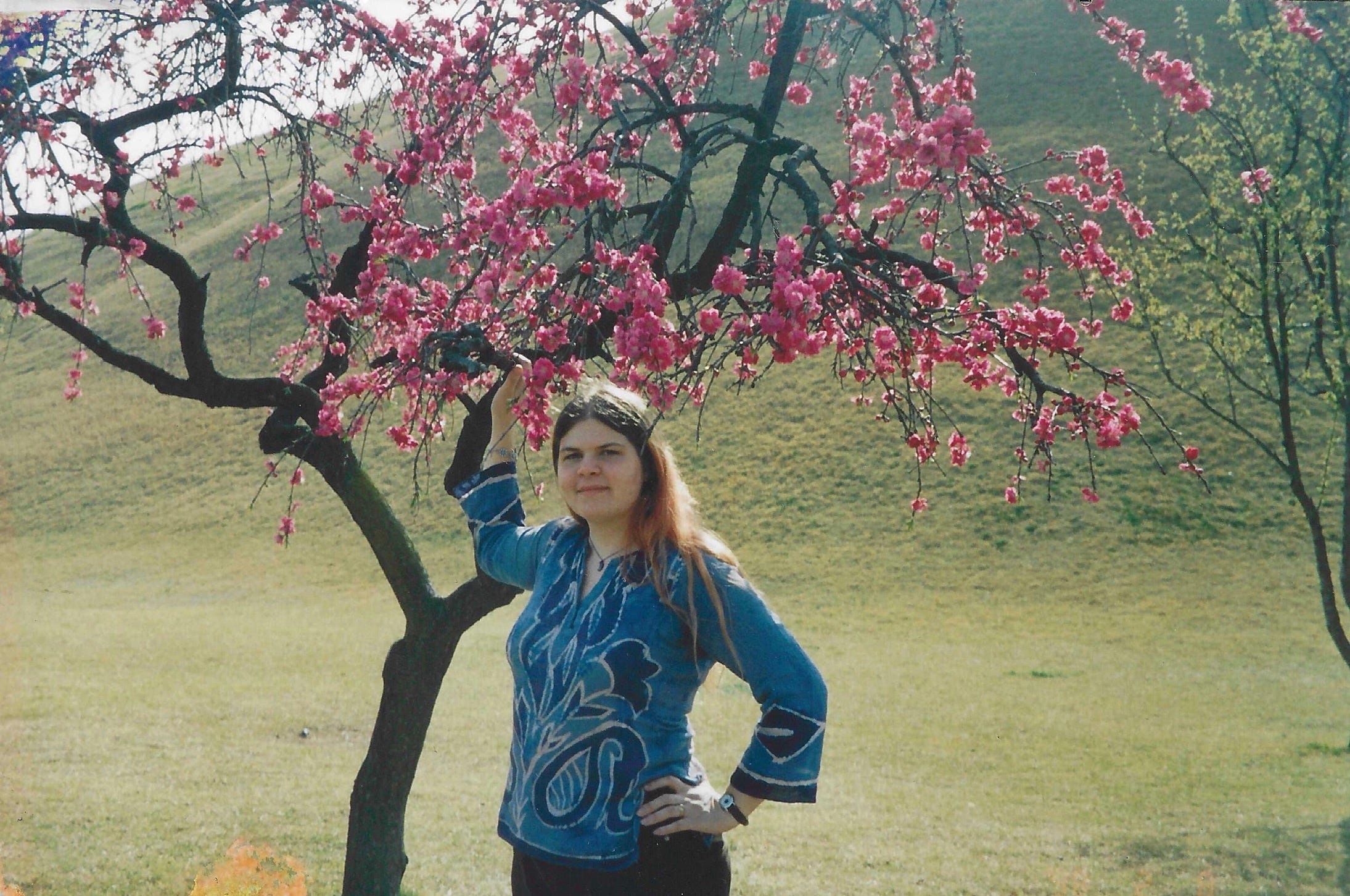
At 22 in Gyeongju, South Korea, gallivanting around with the man I’d eventually marry
This was an incredibly vulnerable post to write. I only felt I could publish it when I was in an emotional position of acceptance and self-embrace where love and validation of my struggles would help form a journey to better health. I’m not interested in fat-shaming, of me or anyone else. Nobody deserves that, even if it’s been done to them for years, in Asia, as someone who is not thin. If you feel the impulse, quiet it. If you can’t, go away. This is not for you. Thanks.
I promised an old friend from my year in China that I would scan some photos we’d both look upon with nostalgia, prioritizing any photos of people we both knew, or of ourselves. We’d worked for the same school, but different branches, and taken one trip with a fellow coworker to East Turkestan (also called Xinjiang, in the far west of China).
Perhaps I finally got around to it because I just finished Philip Pullman’s The Rose Field, which takes place in a fictional other-universe ‘Sinkiang’; regardless, I pulled out the photos recently and began scanning. I hadn’t looked at some of these in a decade or more.
I may do an East Turkestan photo essay at some point just so people can see the place that they’re condemning to CCP cultural genocide when they do nothing, or worse, defend China’s actions. That’s for a future post. I do have many lovely photographs to share.
My first thoughts were pure nostalgia: oh yes, I’ve been to this contentious part of the world. I did learn rudimentary Uyghur. I can still speak a few sentences of it. Because of this, I feel a connection, however tenuous and distant, to the Uyghur struggle for freedom.
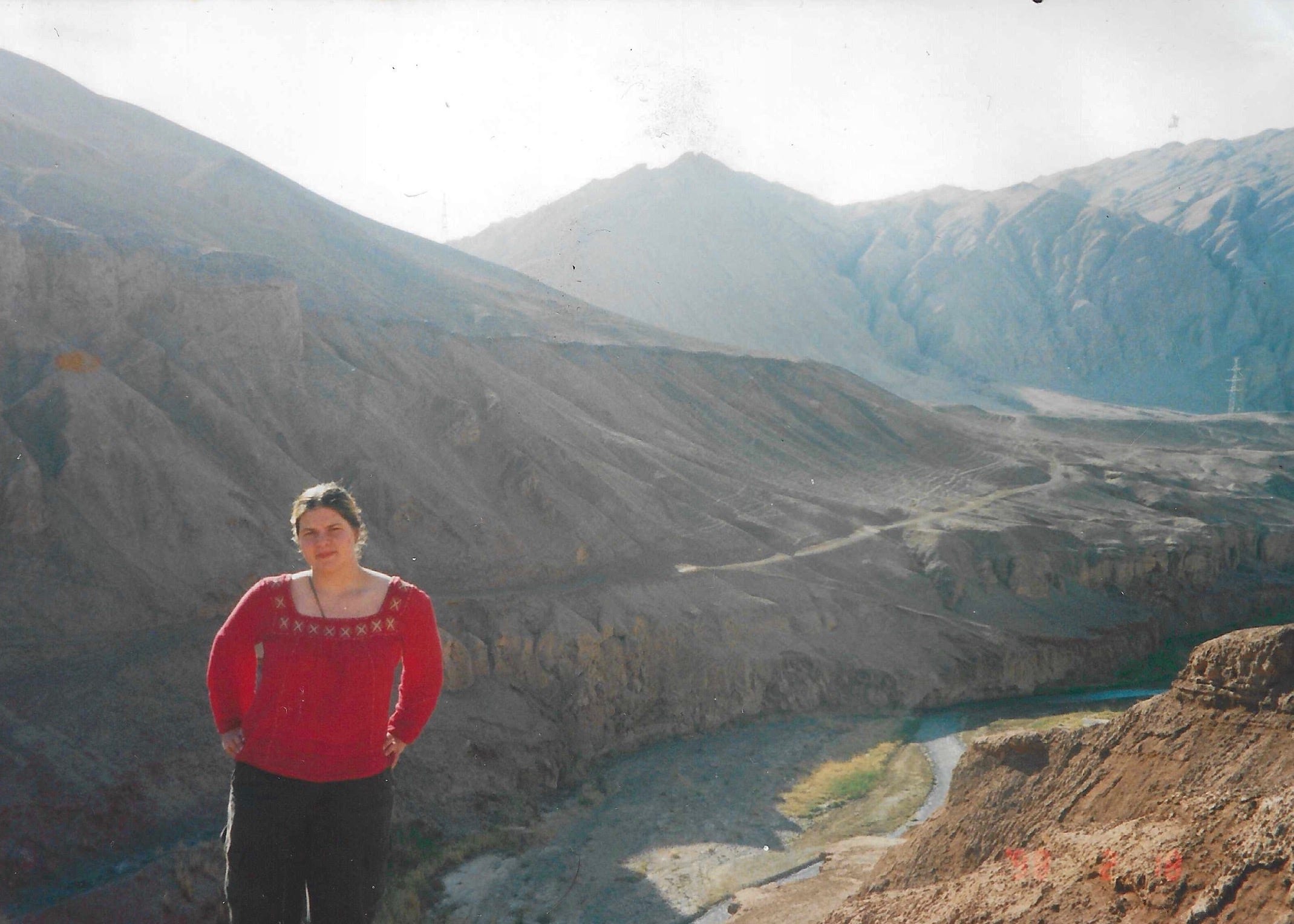
In East Turkestan
I felt nostalgia for who I was: to be 22, broke as a joke with no major health problems. To still fit into vintage clothes. To have a net worth of three digits — high three digits if I was lucky — and still somehow manage all these adventures on essentially no money. I’ve forgotten how to have adventures without a sound financial cushion, which of course renders them hardly adventures at all. Maybe that’s a very privileged thing to say, but I’ll stick by it as a true emotion.
As I scanned and reminisced, though, a sadder thought shone through these old memories.
They’re beautiful, the pictures. Mostly. They show a smiling young woman and her friends in a moment of time while we navigated this slice of our dewy, uncertain twenties in a foreign country. We probably thought that country would help us “find ourselves” or some such nonsense. We were only beginning to realize that you are who you are wherever you go, and foreign locales are not mere backdrops for white people seeking self-discovery.
Regardless, that Jenna was smiling, but underneath the smile was the ineffable melancholy of something not quite right.
While I was in China and indeed long after I left, I described it as an “interesting” experience, but could conjure no floating veneration, no effervescent reverence for my year in that country. I’ve loved every other place I’ve lived — India, Taiwan. I’ve loved the places where I’ve enjoyed extended stays — Turkey, the UK. Why couldn’t I conjure much love for China?
It mostly made me feel bad about myself, and I couldn’t quite explain why. It’s easy to point at the CCP and say that they were responsible for all the worst parts of China. That’s often correct. It’s common to say that one loves the country and the culture but not the government. True enough, I guess. How can one hate a country?
I didn’t hate the country. But I didn’t love it either; I felt compelled to, but I simply could not. Even in these photos, something was held back. It wasn’t the government, it was some other reaction from my contact with the culture; like I was a battery whose positive end had somehow been inserted into the slot the wrong way, and now the whole thing was either completely dead, or a fire hazard.
But what does that mean, really?
I’ve never been thin; I’m naturally a bit tall, with broad shoulders and Eastern European curves. Whether they’re from my Armenian or Polish side doesn’t particularly matter.
I spent most of those years, however, absolutely convinced I was irredeemably fat. A schlubby gorgon, a horrific cryptid. Something Chthulhu would spit back out like, nah, no thanks. Got any hot ones?
All societies are complex and dynamic and have people of all sizes. And nobody, regardless of their actual size, deserves to feel bullied or belittled for their body. There are differences in cultures around the world, and many cultures bully larger women with microaggressions at best and open mockery at worst, but I’m still not sure whether to define this as an aspect of the culture with which I was incompatible, or something other than culture, something merely rude.
There were the little things: clothing rarely fit unless I bought a size that would be embarrassing to me in the United States. Not that we should be embarrassed about our size, but the copious Xs just didn’t match up to my Western size. In China, I bought men’s sweaters and pants if I needed them. Often, these were too small as well, offering no room at all for a proper butt.
And I was made to feel it, with looks and often comments. In the USA I was merely chubby, at worst, I was kinda fat when I was fat, and curvy when I’d managed to lose the weight.
In China. I was fatty fat fat fatty fat.
In many parts of Asia it’s more socially acceptable than in my native slice of the US to comment on someone else’s body, but it felt most common in China. My boss made offhand remarks about my size. My closest local friend, Xiaomin, told me about the man who broke up with her because he couldn’t circle her waist with his hands. Not really about me, but that kind of ridiculous posturing about one woman’s weight is an attack on all women. Xiaomin was, of course, thinner than me, an average-to-slender build for a Chinese woman. I was an average-to-chubby build for a Western woman, a Chinese fatty fat fattoo.
Not everything about me was reduced to my weight, but it happened often enough that it bothered me: I couldn’t really eat properly under that much pressure and gave up white rice (which, incidentally, led to weight loss). I showed my students a picture of my situationship, who was of Indian heritage, calling him my “boyfriend” because that’s the word they understood. My slender coworker showed a picture of her own situationship, a conventionally handsome white man, and someone commented that she found him because she “takes care of herself”; she then glanced back at me.
Aha, so fatphobia is tied up with racism too. Coulda guessed it.
I don’t want to say that this was the moment that ruined China for me, but I never did improve my overall impression of the place.
In Taiwan people make comments too. I usually laugh it off, or refuse to act embarrassed or like I even have the time for such nonsense. I could do that in China too, of course, but it was so constant. Moreso than Taiwan, truly.
Not that it matters — again, no woman deserves this — but I was thinner then, too. The sexism was so rampant, and not just about weight. Xiaomin got fired because the gossipy girls in the office blamed something on her that I’m fairly certain she did not do. The owner of the school had her boyfriend strut around as the director because parents would better trust a man in charge of operations. As for what he really was, well, best not say.
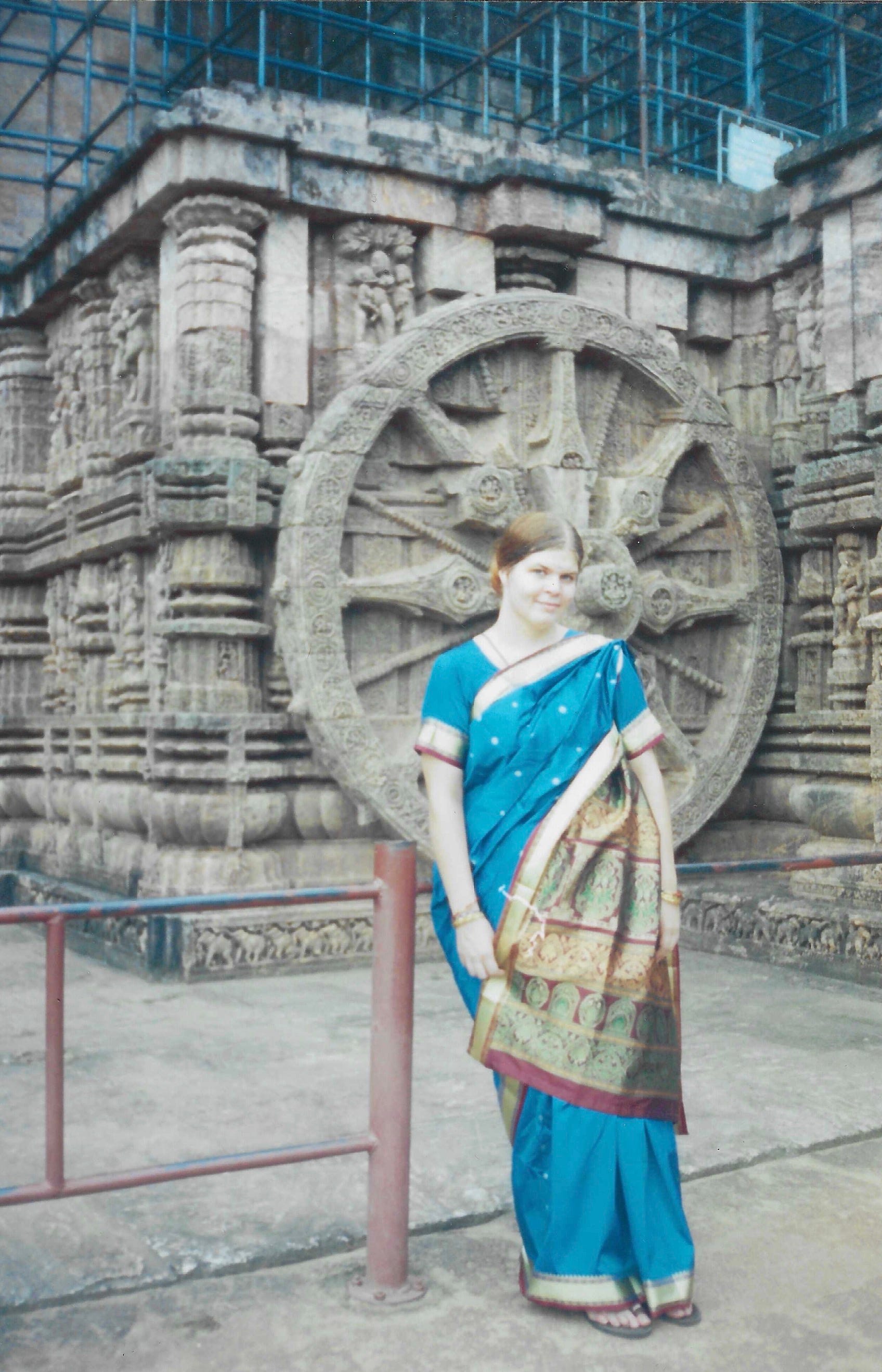
In India on that same trip, dressed locally because it was the easiest way to get men to stop harassing me so much (also I loved that sari dearly)
These comments do happen in other places. But they’re rare and I can deflect them. They’re not so prevalent, so wholly inescapable, that they begin to define you.
I left China with a bitter, barely-defined taste in my mouth about the way women are treated in that culture, and found it much more bearable in Taiwan where, at least, there has been a growing movement to end this kind of bullying of women and their bodies. Taiwanese women still face body-shaming, but social awareness of the misguidedness of such treatment is gaining traction. Bullying fat women never provokes weight loss: they already knew. All bullies do is wreck the self-esteem they need to assess whether it’s necessary to take charge of their bodies, and how.
I’d like to say that more than twenty years of living in Asia — that’s almost the entirety of my adult life — didn’t impact my self-esteem, that I didn’t let it get to me. That I still loved myself for who I was regardless.
That would be a lie. It did get to me. I look back at these pictures and think even if this woman had been fat, she didn’t deserve the way she was treated that year.
I might even say, from the vantage point of 2025, that that woman had attractive qualities and should have thought of herself as such. She deserved to see herself as a whole person. She did not deserve every Chinese person with an opinion on her body offering it up. She did not need her grocery store and restaurant purchases commented in by clerks. “Oh, I see you like chocolate, ha ha!”
”Oooh, vegetables. Very healthy.”
”A second bowl? Are you sure?”
But at the time, it felt like all of Asia was conspiring to tell her — me — that I was indeed just a crashed planetoid mass.
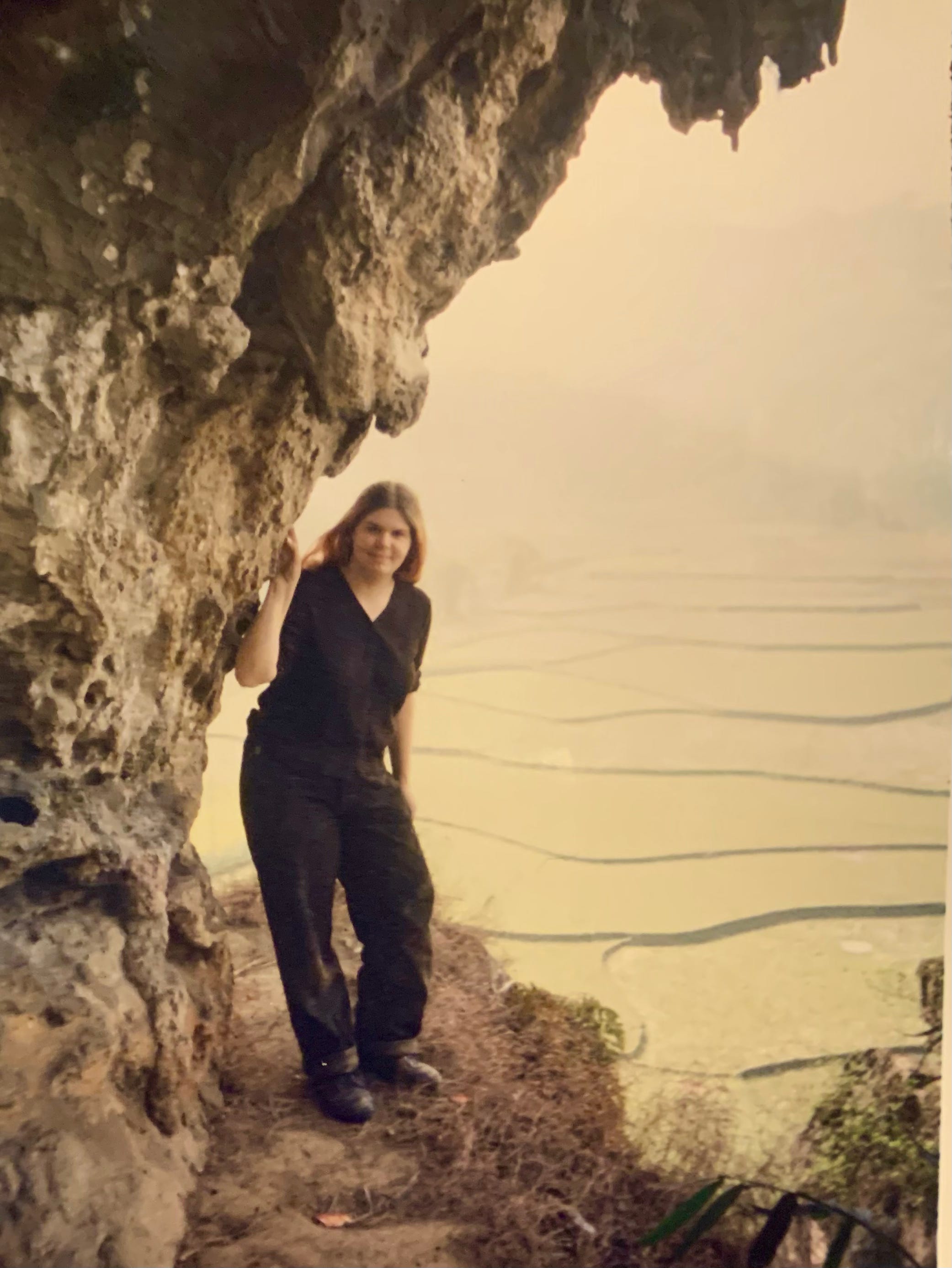
At the Bo Hanging Coffins
Sometimes they didn’t need to say anything at all. I’d walk into a store and the clerk would try to sell me a blouse that was more of a poncho, or a bedsheet with a hole cut in it like a Halloween ghost costume. Why don’t you buy this? It’ll fit you!
I realize, of course, that it really doesn’t matter to anyone else what a person weighs, and even if you are fat, that’s your body and your business, and fat people absolutely can be and are beautiful. Nobody deserves judgement for the body they have. People are just people with bodies that they can or can’t control to varying degrees due to complex factors, and it has nothing to do with anyone else.
I realize it now. I would have said the same thing then, but not applied it to myself. That’s how low self-esteem works. But I still wouldn’t have wanted to spend all that time in a society that tore me down constantly. And, as a white woman, I suspect I got that treatment quite a bit less than Chinese women did!
It wasn’t just Asia. My short time in the US as an adult also sent me the message that I was an unlovable blob of lard and gristle. But at least the clothing in the stores fit me, and not even the largest size, and at least people didn’t typically make unhelpful or passive-aggressive comments. Just about everyone kept it to themselves, if they thought of it at all. Even in Taiwan, such comments are rare.
Again, I don’t know if the difference here is cultural and I’m a poor fit (pun intended) for that culture because I can’t laugh it off or pretend it’s okay, or if it’s just rude people being rude. I don’t know if my discomfort in China originated with my low self-esteem, which made every comment feel like everyone was out to get me, or whether the way I was treated there actually was worse. I lean toward the latter, though. I get those comments in the US and Taiwan, but they’re so much more rare. Interestingly, I did not get them much in India, to my memory.
I’d love to say this is all in the past and the more self-aware and self-respecting person that I am now has gotten over it. I’m not sure I have, though.
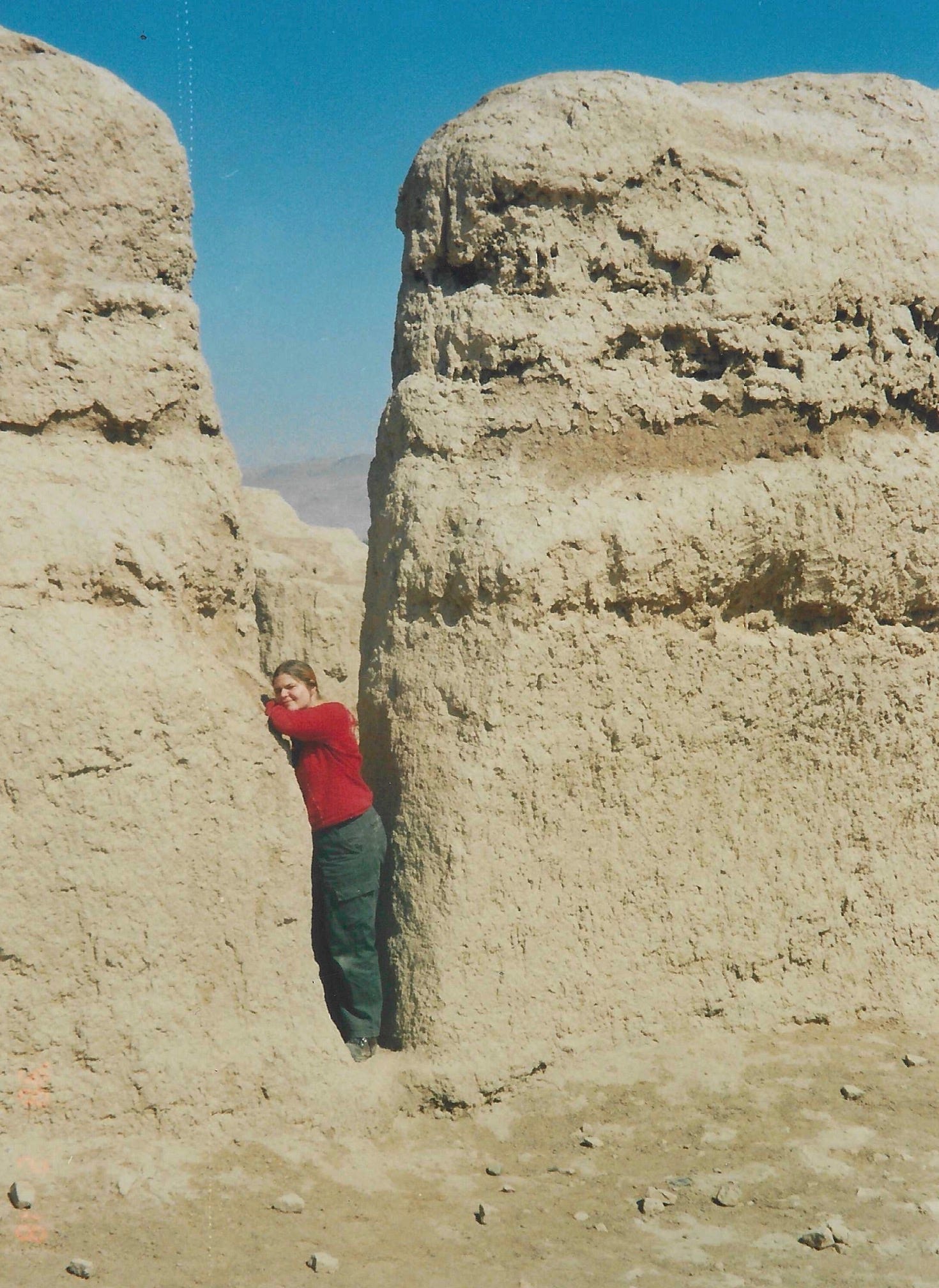
East Turkestan
Spending all of those years with my body type in this part of the world taught me that I didn’t need to bother with makeup or the finer points of hair styling, because I was fat and none of that could help me, unless I was auditioning for the role of Beach Ball the Clown (this is how I thought of myself, not what I think about other people). Perhaps that’s a good thing; now I don’t need makeup to feel good about myself, and indeed don’t wear it. That’s probably been a net positive for my skin. It’s still a soul-killer to think it doesn’t matter for you, though.
It’s affected me in darker ways, too. As I’ve fought the diabetes that came on suddenly after my first fight with COVID, I’ve realized that I can keep it in check with diet, and if I really work at it, I can probably come off the medication.
Here’s a real mind-fuck though: when one is first diagnosed with diabetes, they tend to lose a lot of weight. I did that, kept it off, and am now two sizes smaller than I had been. The weight loss curve stopped when I began medication. I absolutely thought to myself, hey, maybe if I could have the life-threatening untreated diabetes for a little longer I could be three or four sizes smaller and then start the medication!
What the absolute shitbrick of thinking is that? That’s messed up. It’s disordered. But, dear readers, I thought it. Then struck it from my mind and worked on my health.
That has made me wonder, though: when I do eat unhealthily, and not just as a treat, is it because I’ve convinced my subconscious that it doesn’t matter? That I’m going to look like one of those sacrificial hogs at Taiwanese shrines no matter what, so why not have a second plate of mac & cheese when I’m not even that hungry? That I may as well eat more pierogies because I’m gonna look like a pierogi whether I do or not?
That sucks. That’s not healthy. Not just because it’s not true, but because that can do real damage to your insides. It’s psychologically horrific, as it sets your entire internal eating mechanism off-kilter.
If there’s one thing I wish I could tell everyone whose unhelpful commentary, its that it doesn’t help, and hiding it behind fake “concern” doesn’t either. In these pictures, I look happy. I am, somewhat, even though my year in China was tumultuous and most days I felt lucky to have any money at all. I certainly had no self-esteem, and much of that came from life in China itself.
But I was also fighting the spectre of self-loathing when I would have been much better off focusing on actual flaws. I had a temper, and I could be self-centered (still can, though I try not to be). I didn’t know how to manage my undiagnosed ADHD. I probably had depressive episodes, which I’m medicated for now. I didn’t even realize it; I just thought I deserved to feel that way. Truly! Why shouldn’t Porko McFries feel sad? She’s an oinker!
As everyone does, I had plenty of real imperfections, and still do.
Maybe now that I’ve seen these pictures and realized that I was never the person I’d thought I was outwardly, I can spend more time looking inward.
And being more honest about what exactly it was about China that puts me off. Because yes, it’s the government, but it’s also a tendency in the culture that I simply have no tolerance for. Culture doesn’t excuse bullying. My year in China came with many high points, and many fascinating areas of cultural exchange and exploration. It also wrecked me.
Besides being a beautiful woman, you're an amazing writer. I thoroughly enjoyed this treatise.
I remember living in Taiwan and scheduling buying pants in Hong Kong because I could find my sizes there. And I was not that large.